Description
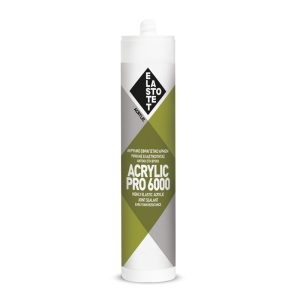
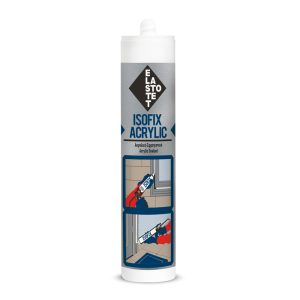
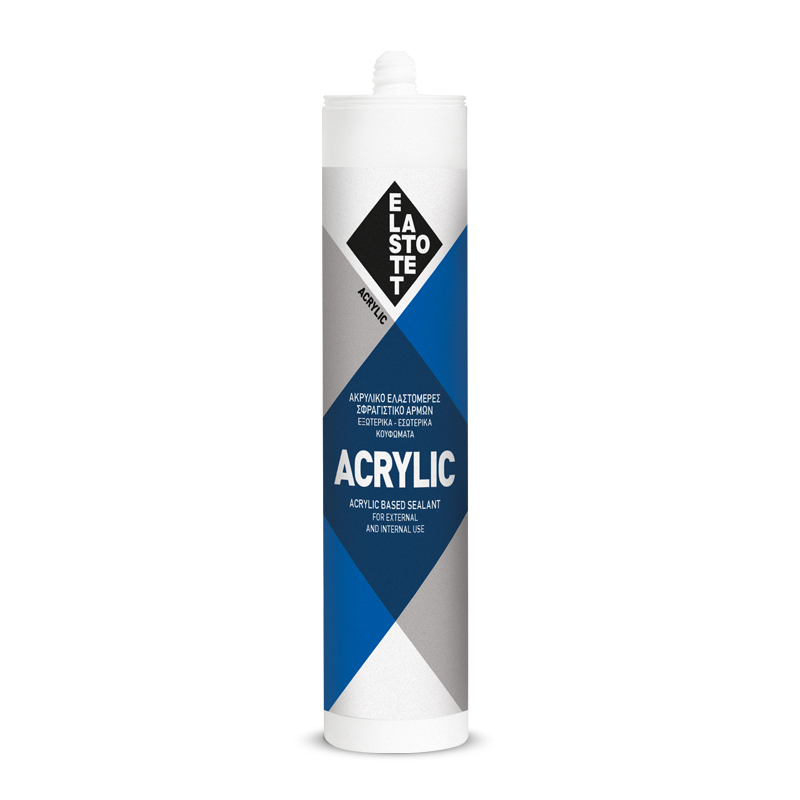
Elastomeric acrylic sealant
APPLICATIONS:
It is ideal for joints between materials with porous surfaces indoors as well as outdoors, e.g. joints between window and sills, windows frames and walls, cracks on walls. Suitable for joints without special dimensional variation (up to 7%). Not suitable for sealing joints permanently under water (e.g. tanks).
PACKAGING:
– Cartridges of 280 ml, carton of 25 pieces.
– Sausages of 400 ml, carton of 30 pieces.
– Sausages of 600 ml, carton of 15 pieces.
COLORS:
White, grey, brown and black. More colors available upon demand. Sausages availbale at white colour
SHELF LIFE:
At least 18 months in storage areas with normal temperature and humidity (not below 0οC).
FAQS about ACRYLIC SEALANTS
Are acrylic sealants suitable for exterior use?
Acrylic sealants are suitable for external use in vertical joints. However, it’s recommended to avoid using them in horizontal external joints, especially in areas with stagnant water.
Why is there often an opening in the joint (detachment of the sealant) a few months after the acrylic sealant’s application?
The main causes of detachment of acrylic sealants and the creation of a crack in the joint are as follows:
-
Low elasticity of the acrylic sealant
-
Moderate to poor adhesion to the substrate
-
Shrinkage of the acrylic sealant mass due to water content
-
Reduction of the sealant’s elasticity and hardening due to low temperature
-
Large variation in joint width
To achieve optimal results, it’s recommended to use highly elastic acrylic sealants, such as Sealac or to use sealants superior to acrylics in elasticity, adhesion and shrinkage, such as silicone sealants (S-100, S-900), polyurethane sealants (Elastoseal-PU) or hybrid sealants (Elastobond, Elastobrid, Isofix Hybrid).
How do acrylic sealants dry?
Acrylic sealants dry by evaporating the water they contain. The rate of evaporation is significantly affected by the temperature and humidity conditions of the environment.
What problems might occur when using acrylic sealants in winter conditions?
Acrylic sealants dry by evaporating the water they contain. In conditions of low temperature and high humidity, water-based products fail to dry sufficiently and gain strength, even after several days of application. In these conditions, acrylic sealants are vulnerable to rain,
which can dissolve and wash them away.
To achieve optimal results, it’s recommended to use special acrylic sealants, such as Acrylic Pro 6000 or sealants that dry with the humidity of the ambient air (silicone, polyurethane, or hybrid sealants).
Why is it difficult to layer acrylic sealants during the summer months?
During summer, especially in areas exposed to the sun, acrylic sealants can form a surface film within seconds. This rapid film formation makes it difficult to apply the sealant evenly.
To achieve optimal results, it’s recommended to use Acrylic Pro 6000, which has a longer working time. Alternatively, you can apply the sealant with a suitable brush after wetting it in soapy water.
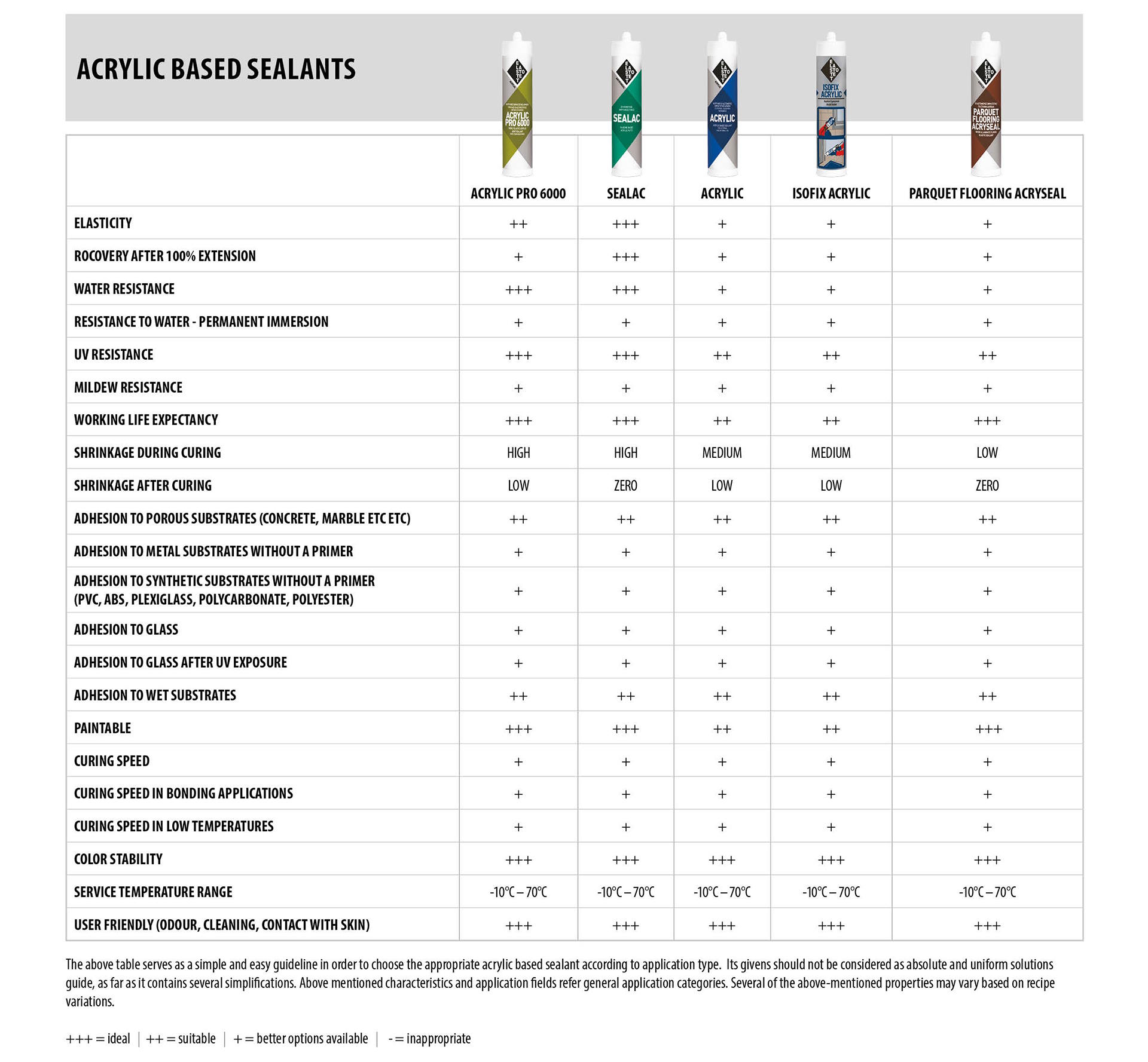
ACRYLIC BASED SEALANTS’ PROPERTIES
SEALANT ADHESIVES COMPARATIVE TABLE
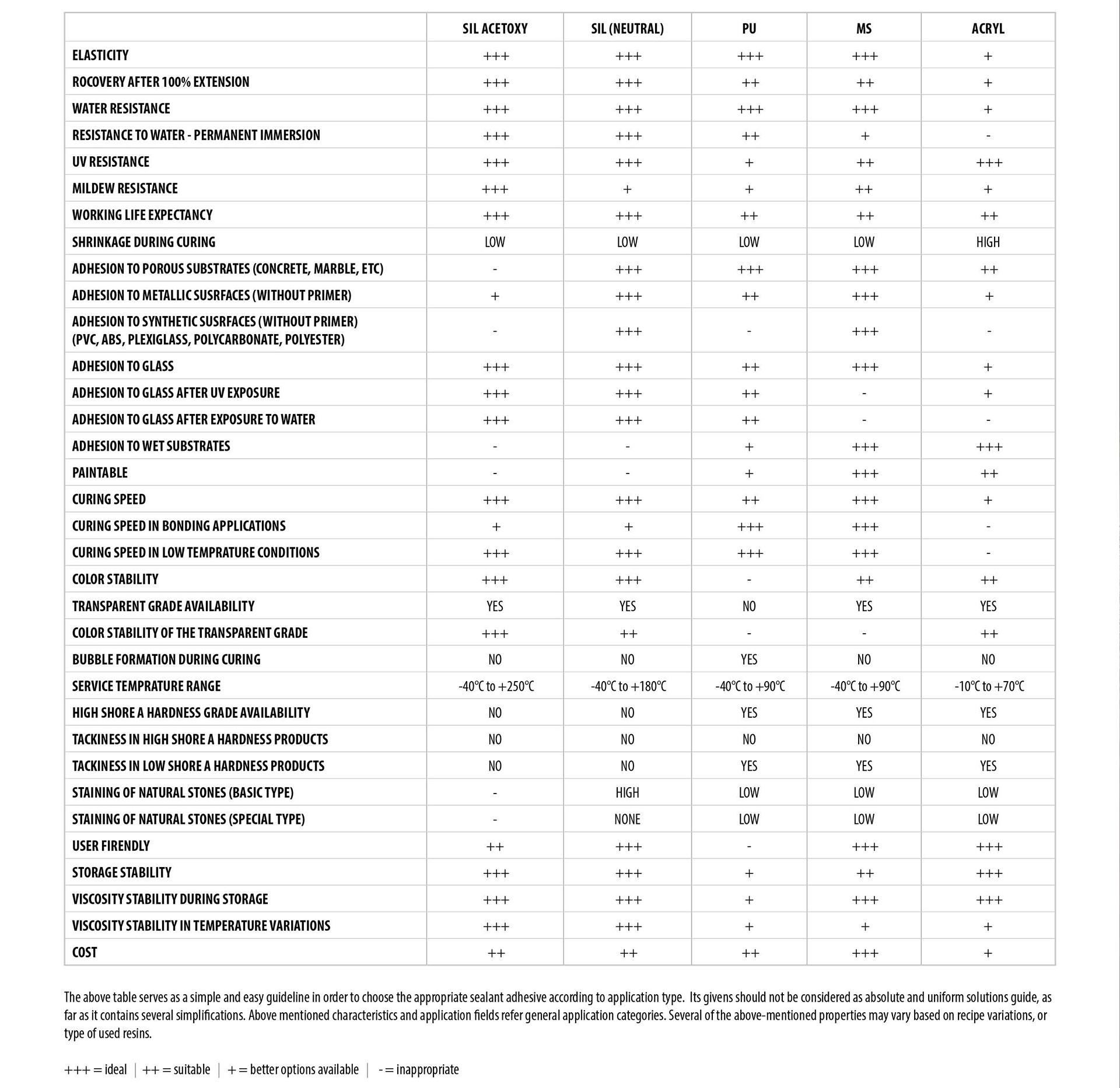
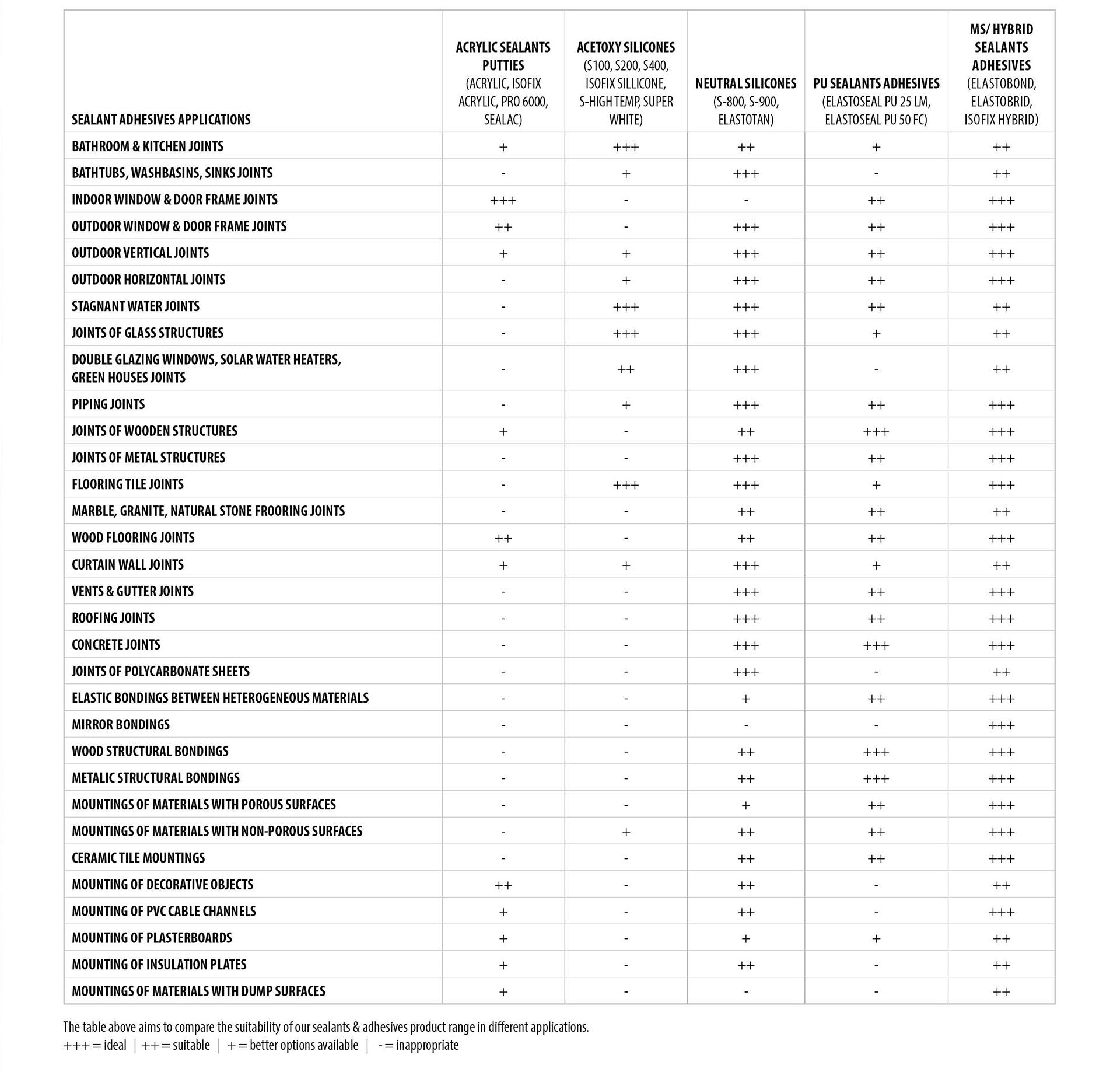
SEALANT ADHESIVES APPLICATIONS TABLE