Description
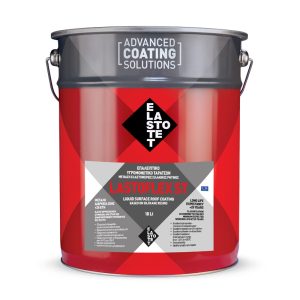
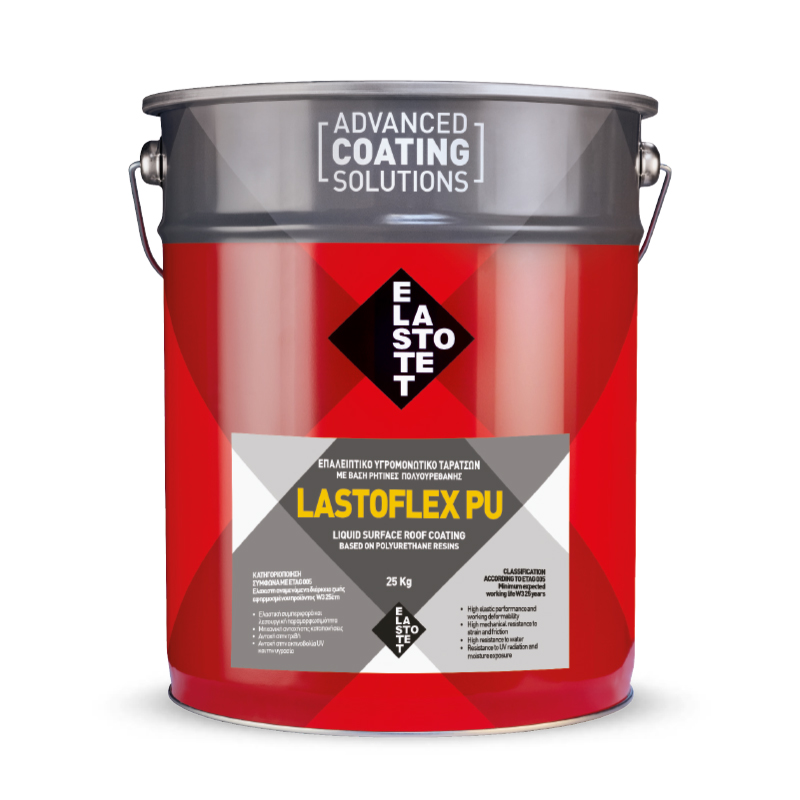
Elastomeric PU based coating for permanent surface waterpoofing
APPLICATIONS:
Recommended for waterproofing surfaces. Due to the high water resistance of the formed membrane, this product is suitable for surfaces with stagnant water on flat roofs, basements, tanks, balconies, roof gardens, flower stands, tunnels (cut & cover method), irrigation canals, bridges, parking spaces, kitchens, bathrooms (under tiles), terraces with polyurethane foam insulation, etc.
The dilution with the special solvent XB ADDITIVE OZ can double the membrane’s life against UV radiation.
PACKAGING:
-1 Kg, 6 Kg, 25 Kg Cans
COLORS:
White, Grey RAL 7035, RAL 7040
SHELF LIFE:
At least 12 months from date of manufacture when stored in room temperature and indoor humidity (not below 0℃ and over 25℃).
FAQS about WATERPROOFING COATINGS
What does certification for 25 years mean?
Certification for 25 years, based on the European directive ETAG 005, indicates that waterproofing products for roofs have been tested and certified for a projected lifespan of up to 25 years (Category W3). This certification provides an expected lifetime for the sealant product and details the method and thickness of the sealant application.
However, this certification isn’t a guarantee from the manufacturer of the product’s successful application, as the manufacturer cannot control or regulate the conditions under which the material is applied. Only the specialist applicator who performs the installation can provide a guarantee for the product’s successful application.
What advantages do Liquid applied waterproofing kits have over waterproofing membranes?
Roof waterproofing can be achieved using either liquid applied waterproofing kits or membranes (such as asphalt, PVC, etc.). The main advantage of liquid applied waterproofing kits is their ability to form a 100% bond with the substrate. This means that if a localized failure occurs, water leakage is confined to the affected area, making it easier to address the problem with a simple, localized repair.
In contrast, if there’s a failure in membrane systems, it’s often challenging to locate the precise leak point and repair it effectively. This usually necessitates the complete removal of the membranes and application of new waterproofing, which can be more costly and disruptive. Additionally, liquid applied waterproofing systems don’t require specialized crews for application, unlike membranes, which must be installed by trained professionals, further increasing the cost of application.
What advantages do Lastoflex products have over water-based coatings?
Liquid applied waterproofing materials are categorized into three main types:
- Water-based products (e.g., acrylics, acrylic-polyurethane hybrids, two-component cements)
- Products that cure with atmospheric humidity (e.g., polyurethanes, silanes)
- Two-component products with 100% solids (e.g., polyurethanes, polyureas)
Lastoflex products primarily fall into the category of coatings that cure with atmospheric humidity. The main advantages of these systems include exceptional water resistance, since they offer very high resistance to water (including ponding), and outstanding low-temperature performance, which means they remain effective even at temperatures as low as -40ºC.
They also possess excellent mechanical properties and provide superior adhesion to common substrates. Additionally, they can be applied and cure effectively even under low-temperature conditions.
Due to these properties, coatings that cure with atmospheric humidity are suitable for permanent waterproofing applications, with an expected lifespan that can exceed 25 years based on certification.
In contrast, water-based coatings generally have limited resistance to water, particularly ponding as well as limited resistance to low temperatures. These two major disadvantages often lead to potential peeling or cracking of the coating. They also cannot be applied in winter weather, as low temperatures and high humidity hinder the evaporation of water and impede curing. Typically, their durability doesn’t exceed 2–3 years, requiring reapplication.
Two-component products with 100% solids are less commonly used due to their more complex application process and higher cost compared to single-component coatings. However, their main advantage is their rapid drying time, even at large thicknesses, making them suitable for specialized applications.
Which Lastoflex product should I choose?
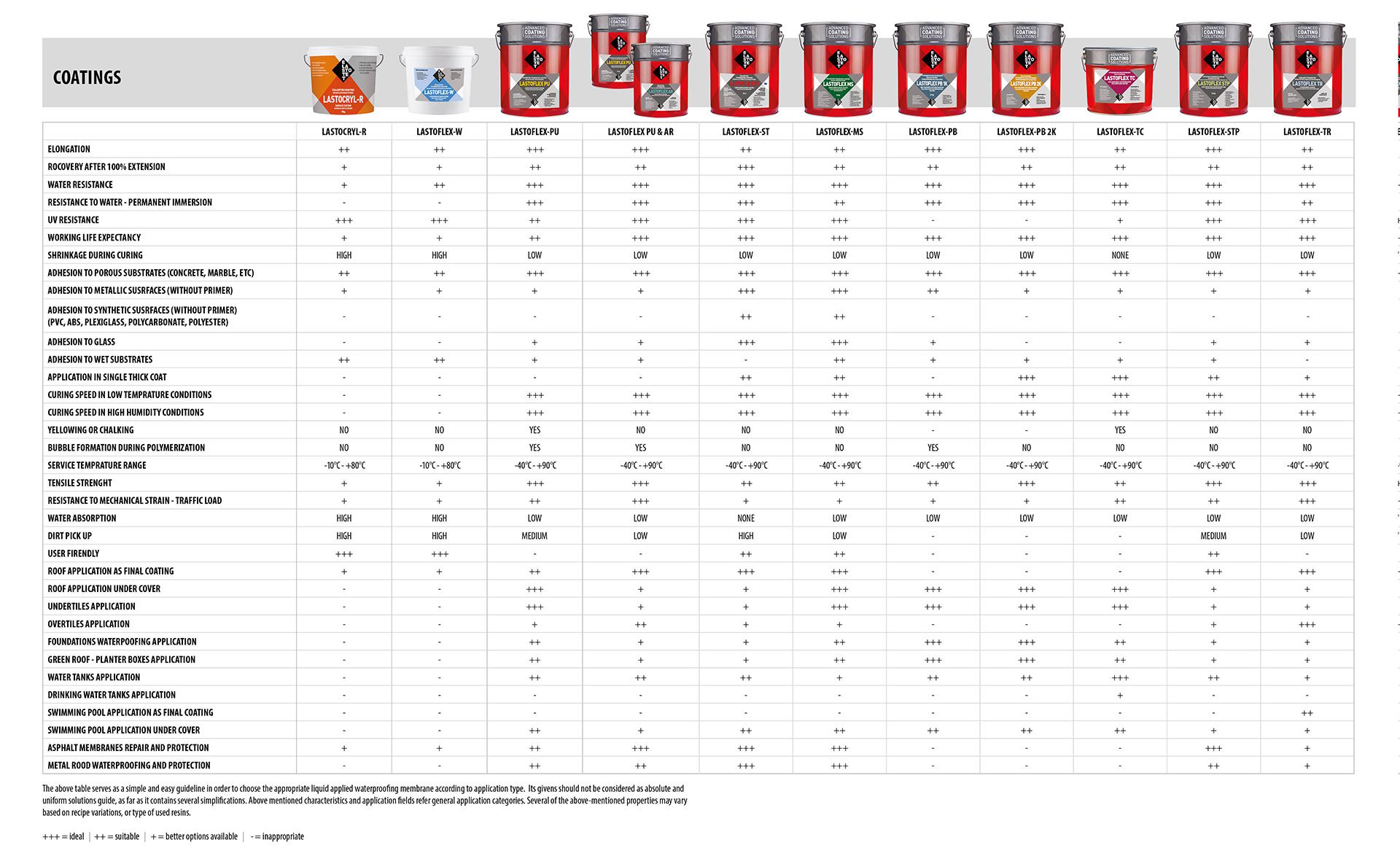
The Lastoflex range is extensive and covers a wide variety of applications. The products can be divided into two main categories:
- Suitable for Exposure to UV Radiation: Lastoflex-PU, Lastoflex-ST, Lastoflex-MS, Lastoflex-AT, Lastoflex-AR, Lastoflex-TR, Lastoflex-W
- Unsuitable for Direct Exposure to UV Radiation: Lastoflex-PB 1k, Lastoflex-PB 2k, Lastoflex-TC
The main characteristics of products suitable for exposure to solar radiation are as follows:
Lastoflex-PU: Offers high mechanical strength and a competitive cost. However, it may experience slight discoloration and chalking over time.
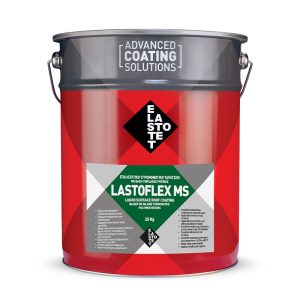
Lastoflex-MS: Provides particularly high resistance to solar radiation, maintains its white color, and adheres directly to wet substrates.
Lastoflex-ST: Delivers maximum resistance to solar radiation and exceptional hydrophobicity.
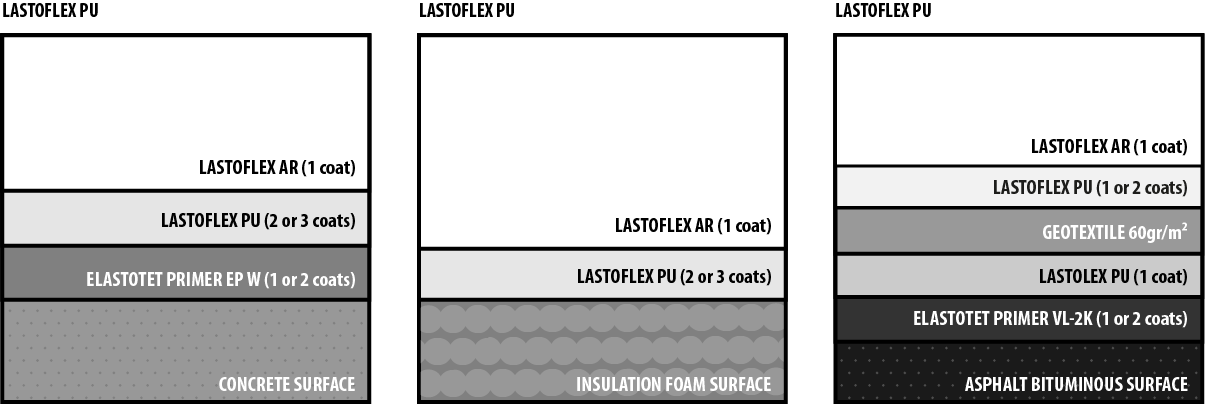
Lastoflex-AT: Acts as a protective top layer over Lastoflex-PU, offering color stability and resolving chalking issues.
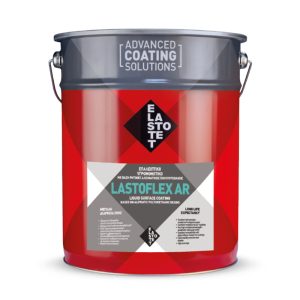
Lastoflex-AR: Also a protective top layer over Lastoflex-PU, similar to Lastoflex-AT but better suited for applications with higher pedestrian traffic requirements.
Lastoflex-TR: A transparent coating ideal for applications where preserving the appearance of the substrate is important (mainly used over tiles).
Lastoflex-W: An easy-to-use, water-based waterproofing solution with limited resistance to water and low temperatures.
In essence, Lastoflex-PU is a cost-effective option with long-term durability. For maximum performance, it’s recommended to use Lastoflex-ST, Lastoflex-MS, or Lastoflex-PU with an additional coating of Lastoflex-AT or Lastoflex-AR.
The main characteristics of products not suitable for exposure to the sun are as follows:
-Lastoflex-PB 1k: Very cost-effective and easy to apply.
-Lastoflex-PB 2k: Excellent elasticity and suitable for fast drying in large thicknesses.
-Lastoflex-TC: Ideal for use in enclosed spaces (solvent-free), quick-drying, and suitable for contact with drinking water.
Based on the above, Lastoflex-PB 1k is a general-purpose coating that’s particularly cost-effective and durable, suitable for applications where the coating will be protected from sunlight.
Should a primer always be applied before using Lastoflex?
Priming is not always necessary and depends mainly on the type of substrate. Primers are used:
- To improve the adhesion of the coating to the substrate.
- To strengthen the surface of loose and porous substrates.
In many cases, Lastoflex coatings will bond directly to the substrate, making a primer unnecessary. Furthermore, there are situations where the primer might be unsuitable for a given substrate, leading to adhesion failure of the primer and consequently of the whole system.
Most primers are suitable for porous substrates (such as concrete) and are often unsuitable for non-porous surfaces, such as pre-existing waterproofing materials for example.
In general, ensure the compatibility of the primer with the substrate. Lastoflex should be used with the recommended primers from Elastotet. Consult the technical brochures for detailed application instructions. Mixing Lastoflex with primers from other manufacturers may lead to failures.
Do Lastoflex coatings need thinning?
Lastoflex products are ready to use and don’t require dilution. However, if you need to reduce the viscosity to facilitate application with a roller or for use with airless spraying, you should use the solvents recommended by the manufacturer for each Lastoflex product.
Should I apply diluted Lastoflex as a first coat?
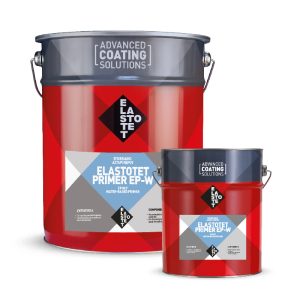
Diluting the coating for the first coat is a technique sometimes used as an alternative to priming. This approach can help the diluted product penetrate better into porous substrates, potentially improving adhesion. However, Elastotet recommends using the designated primers—Primer VL, Primer Epoxy W, and Primer W40—as the preferred solution, rather than relying on diluted Lastoflex.
How do I calculate consumption per square meter?
A common mistake that applicators of liquid applied waterproofing coatings make is to treat them like paints, calculating consumption based on coverage. They often assume that the applied amount, which visually covers the substrate, is sufficient to seal a surface. This may be true for paints, but not for waterproofing coatings.
For waterproofing coatings, the consumption primarily depends on the absorbency, roughness, and irregularity of the substrate. The recommended thickness of the dried film should be at least 1 mm. This is necessary to allow the coating to accommodate the contractions and expansions of the substrate in the daily and annual cycle and to bridge the micro-cracks that may be created.
In cases where substrates may undergo significant cracking (e.g., cement screeds, foam concrete), the dry film thickness of the coating should be doubled, and appropriate reinforcement (such as geotextile) should be used.
Assuming an acceptable dried film thickness of 1 mm, to calculate the consumption in kilograms, we need to know the density (specific weight) of the liquid coating as well as the percentage of solids.
If we apply a waterproofing material with 100% solids and a density of 1 Kg/lt on a smooth surface, then to achieve a dried film thickness of 1 mm, we would have a consumption of 1 Kg/m². In reality, however, most coatings have a density of 1.25 Kg/lt to 1.45 kg/lt and a volume loss (due to solvent or water content) of 15% to 30%. Additionally, the substrate is rarely perfectly smooth, leading to an increased consumption of 10% – 15%.
Therefore, the consumption to achieve a dried thickness of 1 mm ranges from 1.2-1.5 lt/m² or 1.5-2.0 Kg/m². When comparing different coatings, it’s crucial to make careful calculations, as some products are priced by volume (liters) and others by weight (kilograms).
Can diluting the coating increase its yield (cover more area)?
Diluting the coating with — solvent or water increases the volume of the liquid, allowing you to cover more area per application. However, overall consumption remains unchanged. This is because the thinner evaporates during drying, leaving the same dried film thickness as the undiluted coating. Therefore, diluting the coating to increase the yield (cover more area) doesn’t make sense.
COATINGS COMPERATIVE TABLE